
【译文】
简介:
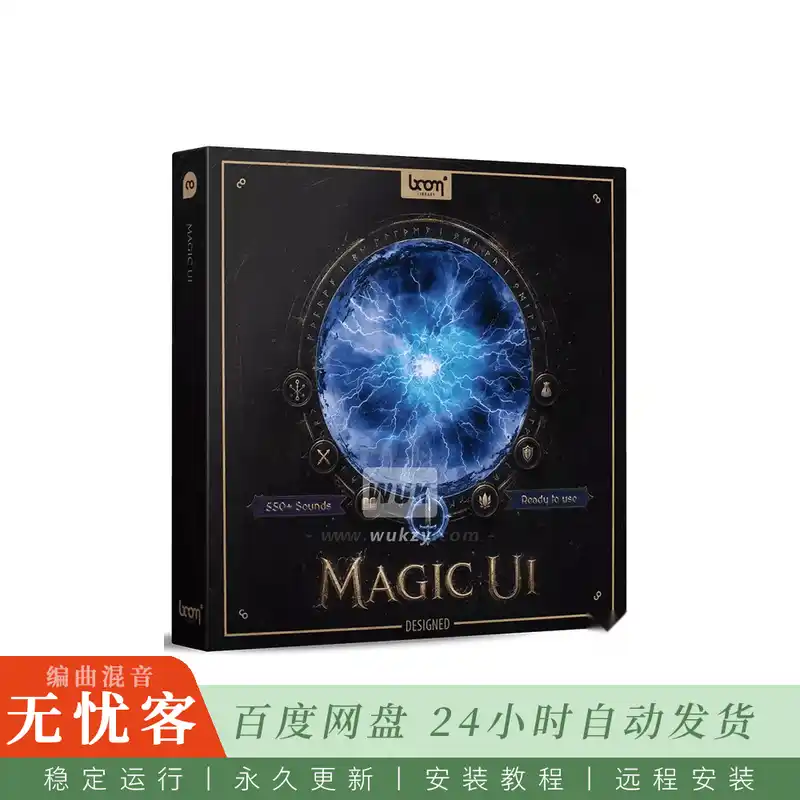
Boom Library魔法用户界面设计WAV
WAV | 24位/96 kHz – 961 MB
MAGIC UI——完整的奇幻与RPG用户界面音效库
在一款奇幻RPG的开发进入第三周时,界面音效依然像是由四套互不兼容的音效库拼凑而成:一套发出木头吱呀作响的声音,一套带来粼粼波光般的质感,还有一套则以一声确认提示音收尾,彼此格格不入;而每一小时用来硬拗这些音效的协调,都是本该用于设计的时间被白白浪费。MAGIC UI将完整的交互体系融于一脉相承的整体之中,从最轻微的悬停到一次完整任务的达成,各个环节浑然一体、相得益彰。有机音色层取样自历史名城中的真木、真石、真金属、真玻璃与真皮,以及一座打字机博物馆;其上叠加了一层富有魔力的音色质感,使每一次触碰都呈现出独一无二的辨识度。
一种声音语言。一个界面。
菜单导航、选项选择、操作确认、系统反馈、战利品、奖励、进度成长、任务与经济体系,均在一套方案中一并涵盖。你不再去拼凑来自三个库的不兼容素材,而是开始构建一个内部已高度一致的接口。
由真实材料打造
有机音色采样自真实木材、石材、金属、玻璃与皮革,取材地点涵盖历史悠久的古堡、打字机博物馆以及录音棚。每一次点击与确认都仿佛承载着实体的分量,因此界面给人一种被托举之感,而非单纯由数字生成。
有机邂逅色调
有机层为界面奠定了其物理基础:质感、动态与可信度。富有韵律的音乐层次赋予了它明确的叙事功能:传递重要性、渲染情感,并将玩家更深入地引入那片奇幻世界。
微小的点击,带来巨大的等级提升
每一次交互都对应着一套明确的层级:微用于聚焦与悬停,小用于选中,中用于确认,大用于任务完成与升级。把一段音效丢进工程里,它就自动找准了自己的位置。
菜单导航与游戏时刻
Design Edition提供了144个经过精心打磨、开箱即用的奇幻风格UI交互组件,围绕两大核心设计理念打造。在菜单导航方面,它涵盖了聚焦、选中、标签切换、确认、无效状态、通知、进度状态,以及小型或大型菜单的展开与收起等交互场景,所有设计均旨在确保功能清晰、过渡效果易读、持续时间可控,并保持视觉风格的一致性。在游戏玩法方面,它涵盖了奖励等级、任务接受、检查点、完成与失败、升级、宝箱开启、魔法特效、音效、生命与法力药水、买卖交易,以及地图的打开与关闭。
ready to implement, ready to customize
这些设计好的音效可以直接投入应用,同时也可作为声音设计的基准。它们可以被编辑、修剪、滤波、移调、叠加,或进行精简处理,以适配特定的界面、层级结构或混音场景。当你需要快速获得可用于生产的UI反馈,同时又希望保留足够的灵活性以将音效适配到自己的项目风格时,这款正是你的不二之选。
我们录制的内容
为了打造令人信服的奇幻界面,我们以这些世界所依托的真实物理材质为起点,将其重塑为既熟悉又充满魔力的形态。录音既在实地场景中进行,也在录音棚内完成,因此MAGIC UI既承载着真实空间的质感,又融入了干净、细腻、高度可控的声音素材,这些素材被无缝地置入一个并不依附于特定声学环境的界面之中。
城堡和老建筑。我们走访了多座历史悠久的城堡与古建筑,以记录有机层的基底。厚重的木门在铁质铰链上吱呀作响,古老的锁具缓缓转动,门闩咔嗒一声归位,一只只箱子开合起伏,木制把手、精美的黄铜机件,镶木地板在脚步重压下发出咯吱声,一本本皮面精装书被轻轻翻开。每一段录音都承载着真实物质所特有的触感与分量,以及它那厚重的历史积淀。
一台打字机博物馆。一个尤为丰富的音源来自一家打字机博物馆,在那里我们录制下了老式打字机与机械乐器那独具特色的机械声响。单个按键清脆的触发感为我们带来了用于悬停与选中的细腻回声。较重的击键与回车操作会发出清晰明确的确认音。内部的齿轮、杠杆、弹簧与发条机构,成为了构建复杂界面音效与胸腔共鸣声的原始素材。
魔法与音调来源。在营造魔幻而富有层次的音色时,我们探索了种类繁多的共鸣与泛音素材:用琴弓拉奏与敲击的水晶杯、金属颂钵、玻璃簧风琴、调音后的风铃,以及针对各类自然声源所采用的多种颗粒合成手法。在有机的基础之上层层叠加,它们塑造了角色的个性,并为玩家带来清晰而令人满意的反馈。
这座图书馆有什么特别之处呢?
一套全有
奇幻与RPG游戏对界面音效的依赖极强,而设计师们往往采用“拼凑式”的做法:从一个音效库中提取木门的吱呀声,从另一个库中截取魔法的粼粼辉光,再从第三个库中挑出确认音,然后费尽周折,试图让这些风格迥异的片段融为一体,构成一套协调统一的界面音效体系。MAGIC UI通过将整套交互语汇统一整合为一个连贯的整体,从最轻微的悬停到完整任务的达成,各个环节都浑然一体,从而彻底解决了这一问题。
有机粉底,色调特质
该建筑的建构刻意采用了混合手法。有机噪声层支持动态与交互,通过真实的材质与物理质感,将声音自然地融入界面之中。一层富有韵律的魔法音效既塑造了角色的个性,又带来了清晰的听觉反馈,赋予其鲜明的辨识度、动人的旋律与情感张力。二者的平衡才是关键。音色层次是选择性的,而非一成不变的:一些细微的操作,比如简单的点击或悬停,可以仅以自然原声呈现;而当音色元素能够带来切实的反馈或情感上的分量时,它才会适时加入。
每一个声音都知道自己的位置
一切皆置于明确的层级结构之中,因此声音的动态范围从极简的反馈逐渐递增至宏大的段落,其规模与此前发生的情节相称。微小的用于聚焦与悬停效果,极其细腻且近乎透明,存在感极弱。按键行程较短,轻按即可,回弹清晰。用于确认的音色,加入额外重量后冲击力更强,延音较短。任务完成与升级时的大型配乐,气势恢宏、层次丰富,兼具张力与电影般的视听体验。设计师在项目中添加一段音效时,无需手动建立该音效与场景的关联,因为这种关联早已预设在素材集中。
脚踏实地,而非卡通化
设计说明同样也阐明了图书馆所拒绝成为的模样。没有那种弹跳感十足的、表情包式的音效,也没有俏皮的喜剧化质感。并非那种轻飘飘、点一下就弹出的休闲移动UI。而不是一种无菌的、纯粹的数字界面词汇。每一次交互都承载着分量、意图与庄重,而富有匠心质感的真实材质则取代了千篇一律的生硬点击声。
适用于您的BOOM工具箱
在我们的产品矩阵中,MAGIC UI介于MODERN UI与CASUAL UI之间,并与Magic系列无缝衔接。这使其成为许多设计师现有工具集的延伸,而非需要从头权衡的独立采购选项。
用例:
-需要在项目伊始便按统一层级体系构建完整界面音效库的奇幻与RPG类作品
-游戏开发工作室的音频团队正在为一款大型作品统一界面与游戏性反馈,而在这种规模下,靠人工维护一致性往往最为困难
-策略与冒险类游戏,其中菜单、物品栏和地图的交互操作占据了相当大的游戏时长
-那些在构建过程中亟需获得生产就绪的界面反馈的项目,同时在界面设计定稿后,仍可选择从源图层重新构建其中任意部分
-从事奇幻与冒险类影视作品的声音设计人员,需要在真实材质的基础上融入富有魔法感的交互细节
提示:
-首先使用建造工具箱中的“选择微小”、“选择小型”和“选择大型”类别来设定您的层级结构。它们之间的比例关系已内置于录制素材之中,因此在添加音色层次之前先将其确定,有助于使整个界面保持协调的尺度感。
-在悬停和普通点击时,将色调图层置后显示。仅凭那股有机的声响,在那种规模下就已显得像是反馈。把“魔法音调脉冲”和“魔法音调渐强”留到那些值得分量的时刻,唯有如此,高潮才更能震撼人心。
-通过逐级晋升至不同的设计等级(奖励普通、奖励魔法、奖励稀有、奖励独特),而非单纯提升单个音效的等级,来逐步提升奖励额度。每一层的设计都比上一层更具分量、更强的魔力,也更为稀有。
-将机械杠杆与金属机械师叠加在胸甲上,以锁定并触发制作相关交互。这两类素材均取材于打字机博物馆的拍摄片段,其中内部的齿轮、杠杆、弹簧以及色带传动机构都被记录为真实的机械运转过程。
-根据面板的大小选择相应的过渡效果:快速滑动时使用“WHOOSH SHORT”,标准菜单的打开与关闭时使用“WHOOSH”,而对于大型或较重的界面动效则选用“WHOOSH LOW”。这三层建筑是为彼此相邻而建的。
-对于所需音效超出“设计版药水”预设的消耗品,可将“POTION HEALTH”与“POTION MANA”叠加“Construction Kit”中的“LIQUID”和“GLASS”类别,以拓展交互效果或使其更贴合您的物品设计。
兼容软件
这套BOOM生物音效库以WAV格式提供,这意味着您可以在任何支持该文件类型的软件中导入并使用它们。
嵌入了丰富的元数据
为为您提供最快捷、最便捷的工作流程,所有文件均包含丰富的元数据,如文件描述和关键词,助您快速找到所需音效。元数据可被音频管理工具读取并处理。
根据新的UCS标准
【原文】
简介:
Boom Library Magic UI Designed WAV
WAV | 24-bit / 96 kHz – 961 MB
MAGIC UI — The Complete Fantasy and RPG UI Sound Effects Library
Three weeks into a fantasy RPG build, the interface still sounds like four different libraries: a wooden creak from one, a shimmer from another, a confirmation tone from a third, none of which agree with each other, and every hour spent forcing them together is an hour not spent designing. MAGIC UI carries the whole interaction vocabulary in one coherent set, from the faintest hover to a full quest complete, built so the parts already belong together. The organic layer was recorded from real wood, stone, metal, glass and leather in historic castles and a typewriter museum, with a magical tonal layer on top that gives every interaction its own recognizable signature.
One Sound Language. One Interface.
Menu navigation, selection, confirmation, system feedback, loot, rewards, progression, quests and economy are all covered in a single set. You stop matching mismatched material from three libraries and start building an interface that already agrees with itself.
Built From Real Material
The organic layer was recorded from real wood, stone, metal, glass and leather, on location in historic castles and a typewriter museum as well as in the studio. Every click and confirm carries the mass of an actual object, so the interface feels held rather than generated.
Organic Meets Tonal
The organic layer gives the interface its physical foundation: texture, motion and credibility. The tonal magical layer gives it purpose: signaling importance, shaping emotion and pulling the player deeper into the fantasy world.
Tiny Clicks To Large Level Ups
Every interaction sits on a defined hierarchy: tiny for focus and hover, small for select, medium for confirm, large for quest complete and level up. Drop a sound into a build and it already knows its place.
Menu Navigation and Gameplay Moments
The Designed edition provides 144 polished, ready-to-use fantasy UI events built around two pillars. For menu navigation it covers focus, select, tab switch, confirm, invalid, notification, progress states and small or large menu open and close, all designed for clear functionality, readable transients, controlled length and consistent character. For gameplay it covers reward tiers, quest accept, checkpoint, complete and fail, level up, chest openings, poofs, whooshes, health and mana potions, buy and sell, and map open and close.
Ready to Implement, Ready to Customize
The Designed sounds can go straight into implementation, and they also work as a sound design base. They can be edited, trimmed, filtered, re-pitched, layered or stripped back to fit a specific interface, hierarchy or mix context. This is the edition to reach for when you need fast, production-ready UI feedback while keeping enough flexibility to adapt the sounds to your own project style.
What We Recorded
To create believable fantasy interfaces, we started from the real, physical materials these worlds are built from and transformed them into something both familiar and magical. Recording ran on location and in the studio, so MAGIC UI carries both the character of real spaces and clean, close, controlled material that drops into an interface without a room attached to it.
Castles and old buildings. We traveled to historic castles and old buildings to capture the foundation of the organic layer. Heavy wooden doors creaking on iron hinges, ancient locks turning, latches snapping into place, chests opening and closing, wooden handles, ornate brass mechanisms, parquet floors creaking under weight, leather-bound books being opened. Every recording carries the tactile weight of real material with mass and history.
A typewriter museum. A particularly rich source was a typewriter museum, where we captured the precise mechanical voice of vintage typewriters and mechanical instruments. The crisp action of individual keys gave us subtle clicks for hover and selection. Heavier strikes and carriage returns provided defined confirmation tones. Internal gears, levers, springs and ribbon mechanics became the raw material for complex interface and chest sounds.
Magical and tonal sources. For the magical and tonal layer we explored a wide range of resonant and harmonic sources: crystal glasses bowed and struck, metal singing bowls, glass harmonicas, tuned wind chimes, and various forms of granular synthesis applied to organic source recordings. Layered over the organic foundation, they define character and deliver clear, satisfying feedback to the player.
What’s so special about this library?
Everything in One Set
Fantasy and RPG games lean heavily on interface sound, and designers often build it the hard way: pulling a wooden creak from one library, a magic shimmer from another, a confirmation tone from a third, then fighting to make those mismatched pieces sit together as one coherent interface. MAGIC UI removes that problem by carrying the whole interaction vocabulary in a single coherent set, from the faintest hover to a full quest complete, built so the parts already belong together.
Organic Foundation, Tonal Character
The construction is deliberately hybrid. An organic noise layer supports motion and process, embedding sounds naturally into the interface through real materials and physical texture. A tonal magical layer defines character and delivers clear feedback, providing identity, melody and emotional weight. The balance between the two is the point. The tonal layer is selective rather than constant: subtle actions like a basic click or hover can sit on the organic sound alone, and the tonal element comes in where it adds real feedback or emotional weight.
Every Sound Knows Its Place
Everything sits on a defined hierarchy, so sounds scale from minimal feedback to large moments in proportion to what just happened. Tiny for focus and hover, very subtle and almost transparent, minimal presence. Small for select, a light click with clear response. Medium for confirm, a stronger impact with added weight and short sustain. Large for quest complete and level up, a big moment with depth, sustain and cinematic feel. A designer dropping a sound into a build does not have to establish that relationship by hand, because it is already built into the set.
Grounded, Not Cartoon
The design brief is as much about what the library refuses to be. No bouncy, emoji-style sounds or playful comedic textures. Not the lightweight ping-and-pop of casual mobile UI. Not a sterile, purely digital interface vocabulary. Every interaction has weight, intent and seriousness, and real materials with crafted texture replace generic synthetic clicks.
Fits Your BOOM Toolkit
Within our own catalog, MAGIC UI is the connection between MODERN UI and CASUAL UI, and it links directly to the Magic Series. That makes it an extension of tools many designers already own rather than a standalone purchase to be weighed from scratch.
Use cases:
– Fantasy and RPG productions that need a full interface sound set built along one hierarchy from the start of the project
– Studio game audio teams standardizing interface and gameplay feedback across a large title, where consistency is the hardest thing to maintain by hand
– Strategy and adventure titles where menu, inventory and map interactions account for a large share of playtime
– Productions that need production-ready interface feedback in the build immediately, with the option to rebuild any of it from the source layers once the interface design settles
– Film and television sound designers working on fantasy and adventure content who need magical interaction detail with real material underneath it
Tips:
– Set your hierarchy first using the Construction Kit’s SELECT TINY, SELECT SMALL and SELECT LARGE categories. The size relationship between them is built into the recorded material, so establishing it before adding tonal layers keeps the whole interface in proportion.
– Hold the tonal layer back on hover and basic clicks. The organic sound alone reads as feedback at that scale. Save MAGICAL TONAL PING and MAGICAL TONAL SWELL for the moments that deserve the weight, which is what makes the large moments land.
– Build reward escalation by moving through the Designed tiers (REWARD NORMAL, REWARD MAGIC, REWARD RARE, REWARD UNIQUE) rather than raising the level on a single sound. Each tier was designed with more weight, magic and rarity than the last.
– Layer MECH LEVER and METAL MECHANIC under chest, lock and crafting interactions. Both categories draw on the typewriter museum sessions, where internal gears, levers, springs and ribbon mechanics were captured as real mechanical action.
– Match the transition to the size of the panel using WHOOSH SHORT for fast swipes, WHOOSH for standard menu open and close, and WHOOSH LOW for large or heavy interface moves. The three tiers were built to sit together.
– For consumables that need more than the Designed potion sounds, layer POTION HEALTH and POTION MANA with the Construction Kit’s LIQUID and GLASS categories to extend the interaction or make it specific to your item design.
COMPATIBLE SOFTWARE
This BOOM Library of creature sounds comes as WAV files, meaning you can import and work with them in any software that can handle this file type.
RICH METADATA EMBEDDED
To provide you with the fastest and easiest workflow possible, all files contain extensive metadata like file description & keywords to quickly find the sounds you’re looking for. Metadata can be read and processed by audio management tools.
ACCORDING TO THE NEW UCS STANDARD





评论0