
简介:
Lemur Audio Ester 2 v2.0.0,包括已修补和Keygen-R2R
团队R2R | 2026年9月16日 | 17.0MB
管阶段是第一位的
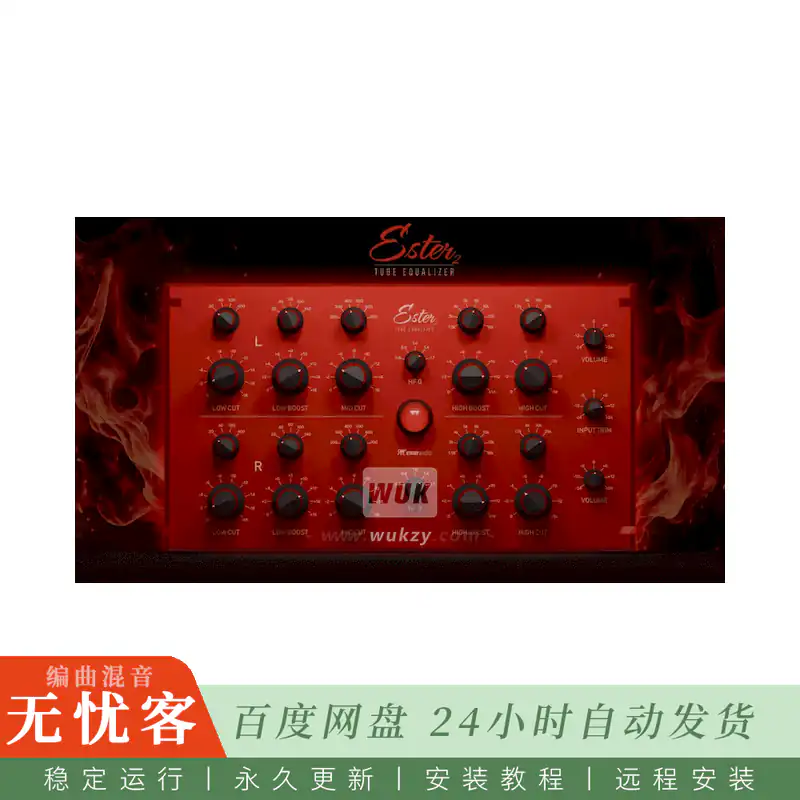
这种类型的无源均衡器在进路上带有一个阀,在进路上带有另一个阀,在它们之间具有无源网络。ESTER 2收集阀门在驱动时的作用-密度,谐波,声音在推动下发生变化的方式,需要一点时间才能回到均衡器前面的一个电子管阶段,就像前置放大器一样,有自己的两个声音。
那种摆放是经过精心设计的。在均衡器之后接入该音色模块时,每次提升增益都会使其更大幅度地进入饱和,而每当你调整某个频段时,都不得不重新调整以获得理想的饱和效果。在输入端,色彩与音色成为两个独立的调节选项:先通过INPUT TRIM设置好增益,随后即可自由进行均衡调整。饱和度会保持在你设定的位置,曲线也会精确地停留在你所设置的参数上,而均衡器还能塑造谐波——高切可以柔化硬盘录音带来的尖锐感,低切则能收敛其产生的厚重感。
通道列之间的灯具是舞台自带的功率计,用于测量实际产生的谐波功率。SAT在不破坏任何布景的情况下,将整个舞台搬空。
两根管子,两段历史
顶部排中的单元可在两根独立发声的管子之间切换音路,且它们的驱动方式各不相同。6072A的起始值较低,并在输入微调的整个行程范围内逐渐增大。6N1P的音色保持干净的时间更长,随后失真迅速涌现,高频段冲击力更强。两者的音量已对齐,因此切换时改变的是音色,而非音量。一个新的实例在6072A端口上打开。
输入配平-一个旋钮用于整个导管
输入微调设置到达阀门的水平,跨越其刻度为 ± 24 dB,并且一个旋钮决定关于饱和度的一切-在阀门阶段,更多的谐波和更多的管自己的四舍五入从来不是两个独立的事情。舞台补偿了它自己的通过水平,所以输入修剪购买密度和颜色而不是音量,这就是让A/B与旁路比较字符而不是响度的原因。
一种无源管均衡器
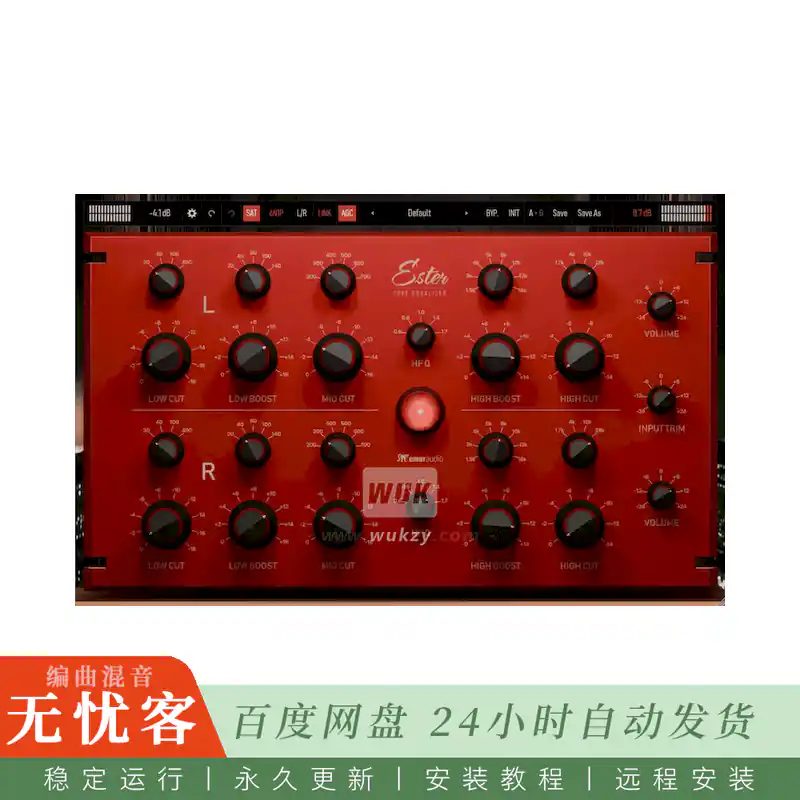
每个通道五个过滤器-低切,低升压,中切,高升压和高切-每个都有自己的雕刻刻度。频率选择器是真正的旋转开关,它们落在刻有挡块的地方,它们之间无处可去,因此您喜欢的设置会在一次又一次地返回。曲线设计广泛而柔和: 它们倾向于混合的平衡,而不是雕刻。
五个过滤器,一个网络
正确使用一个过滤器是最容易的一半。在无源均衡器中,这些部分共享一个网络,因此您一次从所有五个部分获得的曲线不是五个部分的总和-移动一个和其他部分一起移动,这种交互是这种均衡器听起来的大部分内容。ESTER 2保持两者: 每个过滤器本身,以及它们五个一起形成的整个曲线。它是整个单元的曲线,而不仅仅是被动网络的曲线,它的放大器和变压器的线性印记是它的一部分-它发出的声音是它自己的。
低端,两种方式同时
低升压提升到16分贝在20,40,60,100或140赫兹。低切在30、40、100或400 hz时需要高达-18 db的回退。它们是对一个被动网络的两个控制,经典的做法是将它们一起使用: 在同一区域周围进行增强和切割,然后在其上方拉出泥浆的情况下获得重量。没有一个架子可以做到这一点。
中间切割-其他一切的房间
在200、300、400、500、600或700Hz时输出高达-16 dB。曲线很宽,所以两个或三个dB打开了整个中档,而不是在其中留下一个洞-并且设置为低提升,这是这种均衡器最古老的举动: 重量在下面,盒子就在上面取出。
空气在上面,你可以选择一个Q
在1.5 kHz至16 kHz的八位置网格上,高升压达到14 dB,HF Q设置宽,开放光泽的提升宽度为-0.6,1.7把能量放在你想要的地方。HIGH CUT然后在1.7、4、10或28 kHz时剪裁高达-14 dB,因此您可以以相同的手势添加空气并脱下边缘。
两个通道,每个通道都以自己的体积结束
两个完整的独立通道-每个通道都有自己的五个滤波器,自己的HF Q和自己的音量超过 ± 24 dB。L/R给你一个真正的双单声道均衡器; M/S将相同的两排变成中心和侧面,这样你就可以在不接触人声的情况下提升两侧的空气,或者在不缩小任何东西的情况下巩固中间。在M/S中,这两个体积剪裁成为宽度控制。当移动应该是对称的并进行一次时,链接将行组合。
简介:
Lemur Audio Ester 2 v2.0.0 Incl Patched and Keygen-R2R
Team R2R | 16 Sep 2026 | 17.0MB
The tube stage comes first
A passive equalizer of this kind carries a valve on the way in and another on the way out, with the passive network between them. ESTER 2 gathers what a valve does when you drive it — the density, the harmonics, the way the sound shifts under a push and takes a moment to come back — into one tube stage in front of the equalizer, like a preamp, in two voicings of its own.
That placement is deliberate. With the valve after the EQ, every boost would also drive it harder, and you would be chasing the saturation each time you touched a band. In front, colour and tone become two separate decisions: set the drive once with INPUT TRIM, then equalize freely. The amount of saturation stays where you put it, the curves stay exactly where you set them, and the EQ gets to shape the harmonics too — HIGH CUT can smooth the edge a hard drive adds, LOW CUT can tidy the weight it builds.
The lamp between the channel rows is the stage’s own meter, reading the harmonic product actually being generated. SAT takes the whole stage out without disturbing a setting.
Two tubes, two chapters of history
The cell in the top bar switches the stage between two tubes, voiced separately, and they drive differently. 6072A starts early and thickens gradually across the whole travel of INPUT TRIM. 6N1P stays clean for longer, then breaks up quickly and hits harder in the upper half. Both are matched in loudness, so switching changes the character, not the volume. A fresh instance opens on 6072A.
INPUT TRIM — one knob for the whole tube
INPUT TRIM sets the level arriving at the valve across the full ±24 dB its scale is engraved for, and that one knob decides everything about the saturation — on a valve stage, more harmonics and more of the tube’s own rounding were never two separate things. The stage compensates its own through-level, so INPUT TRIM buys density and colour instead of volume, which is what lets an A/B against bypass compare character rather than loudness.
A passive tube equalizer
Five filters per channel — LOW CUT, LOW BOOST, MID CUT, HIGH BOOST and HIGH CUT — each on its own engraved scale. The frequency selectors are real rotary switches that land on their engraved stops and nowhere between them, so a setting you love comes back exactly, session after session. The curves are broad and gentle by design: they lean the balance of a mix rather than carve it.
Five filters, one network
Getting one filter right is the easy half. In a passive equalizer the sections share a network, so the curve you get from all five at once is not the sum of the five — move one and the others move with it, and that interaction is most of what this kind of equalizer sounds like. ESTER 2 keeps both: each filter on its own, and the whole curve the five of them make together. And it is the curve of a whole unit, not of the passive network alone — the quiet, linear imprint of its amplifiers and transformers is part of it — and the voice that comes out of it is its own.
The low end, both ways at once
LOW BOOST lifts up to +16 dB at 20, 40, 60, 100 or 140 Hz. LOW CUT takes up to −18 dB back out at 30, 40, 100 or 400 Hz. They are two controls over one passive network, and the classic move is to use them together: boost and cut around the same region and you get weight underneath with the mud pulled out above it. No single shelf will do that.
MID CUT — room for everything else
Up to −16 dB out at 200, 300, 400, 500, 600 or 700 Hz. The curve is broad, so two or three dB opens the whole midrange instead of leaving a hole in it — and set against LOW BOOST it is the oldest move this kind of equalizer has: weight underneath, the box taken out just above it.
Air on top, with a Q you choose
HIGH BOOST reaches +14 dB across an eight-position grid from 1.5 kHz to 16 kHz, and HF Q sets how wide that lift is — 0.6 for a broad, open sheen, 1.7 to put the energy exactly where you want it. HIGH CUT then trims up to −14 dB at 1.7, 4, 10 or 28 kHz, so you can add air and take off edge in the same gesture.
Two channels, and each one ends in its own VOLUME
Two complete, independent channels — each with its own five filters, its own HF Q, and its own VOLUME over ±24 dB after everything else. L/R gives you a true dual-mono equalizer; M/S turns the same two rows into centre and sides, so you can lift the air on the sides without touching the vocal, or firm up the middle without narrowing anything. In M/S those two VOLUME trims become a width control. LINK gangs the rows when the move should be symmetrical and made once.

评论0