
简介:
狐猴音频SIMON v1.7.8已注册-R2R
团队R2R | 2026年9月14日 | 55.5MB
新版本的SIMON从母带均衡器添加了运算放大器的数学完美模型,具有三种L/R矩阵模式: 相等-两个通道共享相同的谐波结构;现代-每个通道都有微妙不同的谐波结构; 和复古-每个通道都有明显不同的谐波结构。它有两个饱和模型-运算放大器,真正的硬件和运算放大器LP (线性相位),解决了具有上带相位旋转的同一链-与SIMON原始的干净饱和度一起使用DIGITAL。运算放大器和运算放大器LP在HQ和ULTRA质量模式下运行,以保证质量和清洁度。我们还对进一步的非线性进行了建模,这些非线性为整个系统带来了动态性,生动性和音乐性-超越了硬件原始版本。
运算放大器——忠实于硬件
运算放大器的相位响应在高频段呈现旋转特性
真正的运算放大器忠实于电路: 它的信号分支馈送变压器,并且运算放大器 → 变压器路径旋转上频带中的相位-与原始完全一样。这就是硬件的声音,包括它的特性和一切。
运算放大器低通-线性相位
运算放大器低通相位响应,在整个频带内相位线性
运算放大器LP对完全相同的信号链进行建模,但解决了高频带相位旋转-更清洁的相位线性具有相同的谐波特性。当你希望获得具有完美线性高频响应的运算放大器音色时,就选择它吧。
一款真正的母带均衡器
带有文字标识和输入饰条的SIMON中央部分
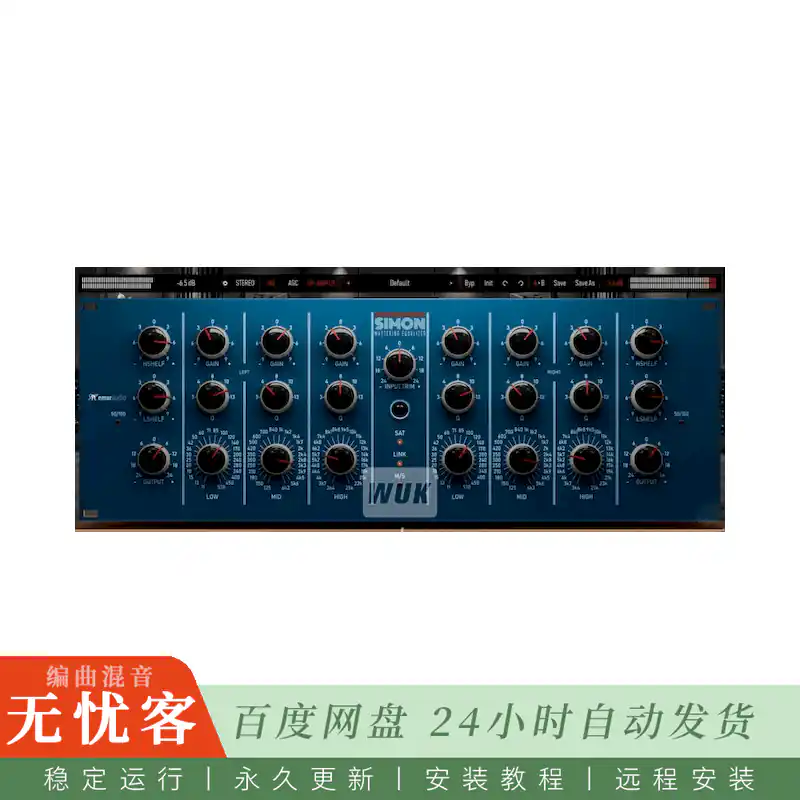
两个独立的通道,每个都有高低架,三个全参数带和自己的输出修剪-一个完整的,对称母带制作EQ围绕中央输入微调构建,为模拟风格的饱和阶段提供能量。随着AGC,离开EQ的水平会自动匹配,因此您可以自由均衡,而不会使饱和度更加困难。
三个参数频段
SIMON三个参数频段——增益、Q值和频率
低,中和高-每个都有自己的增益,步进Q和母带级频率网格,在两个通道上。当您需要固定单个频率时,具有广泛而音乐的音调整形,紧绷和手术,具有精确,可重复的召回。
音乐的高音和低音搁板
SIMON高低频搁板控制
一个宽阔的高频架子,用于空气和顶端重量,以及一个可在50或100Hz切换的低架子,用于保暖和底端控制-经典的,柔和的掌握位于参数带之外的动作。
模拟风格的饱和度
SIMON SAT饱和指示器和输入增益调整
INPUT TRIM驱动内置的模拟式饱和器-您越努力推动,SIMON添加的谐波颜色和密度就越多。live SAT指示器显示它的工作强度,每通道输出修剪可让您匹配级别,以便判断音调,而不是响度。
链接与中/侧
SIMON LINK和M/S模式指示灯
LINK将左右控件联系在一起,以实现快速,对称的立体声移动。M/S从左/右到中/侧切换处理,因此您可以独立地均衡中心和立体声侧-母带-级立体声控制。
简介:
Lemur Audio SIMON v1.7.8 Regged-R2R
Team R2R | 14 Sep 2026 | 55.5MB
The new version of SIMON adds a mathematically perfect model of the OP-AMP from a mastering equalizer, with three L/R matrix modes: EQUAL — both channels share the same harmonic structure; MODERN — each channel carries a subtly different harmonic structure; and VINTAGE — each channel has a distinctly different harmonic structure. It comes as two saturation models — OP-AMP, true to the hardware, and OP-AMP LP (Linear Phase), the same chain with its upper-band phase rotation resolved — alongside DIGITAL, SIMON’s original clean saturation. OP-AMP and OP-AMP LP run in the HQ and ULTRA quality modes for guaranteed quality and cleanliness. We have also modelled further non-linearities that bring dynamics, liveliness and musicality into the whole system — surpassing the hardware original.
OP-AMP — true to the hardware
OP-AMP phase response showing rotation in the upper band
The authentic OP-AMP is faithful to the circuit: its signal branch feeds a transformer, and that OP-AMP → transformer path rotates the phase in the upper band — exactly like the original. It is the sound of the hardware, character and all.
OP-AMP LP — Linear Phase
OP-AMP LP phase response, phase-linear across the band
OP-AMP LP models the very same signal chain but resolves that upper-band phase rotation — a cleaner, phase-linear take on the same harmonic character. Reach for it when you want the OP-AMP colour with a perfectly linear top end.
A true mastering equalizer
SIMON centre section with the wordmark and INPUT TRIM
Two independent channels, each with high and low shelves, three fully parametric bands and its own output trim — a complete, symmetrical mastering EQ built around a central INPUT TRIM that feeds the analog-style saturation stage. With AGC on, the level leaving the EQ is matched automatically, so you can equalize freely without driving the saturation any harder.
Three parametric bands
SIMON three parametric bands — GAIN, Q and frequency
LOW, MID and HIGH — each with its own GAIN, stepped Q and a mastering-grade frequency grid, on both channels. Broad and musical for tone-shaping, tight and surgical when you need to fix a single frequency, with exact, repeatable recalls.
Musical high & low shelves
SIMON high and low shelf controls
A broad high-frequency shelf for air and top-end weight, and a low shelf switchable at 50 or 100 Hz for warmth and bottom-end control — the classic, gentle mastering moves that sit outside the parametric bands.
Analog-style saturation
SIMON SAT saturation indicator and INPUT TRIM
INPUT TRIM drives a built-in analog-style saturator — the harder you push, the more harmonic colour and density SIMON adds. The live SAT indicator shows exactly how hard it is working, and the per-channel OUTPUT trim lets you match level so you judge tone, not loudness.
Link & Mid/Side
SIMON LINK and M/S mode indicators
LINK ties the left and right controls together for fast, symmetrical stereo moves. M/S switches processing from Left/Right to Mid/Side, so you can equalize the centre and the stereo sides independently — mastering-grade stereo control.

评论0