
简介:
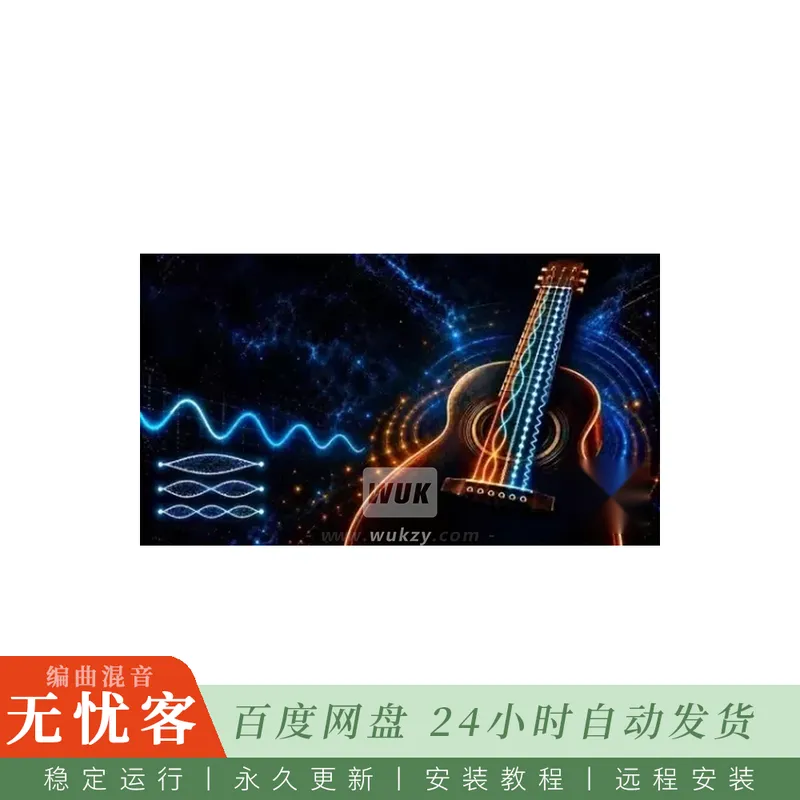
Udemy音乐科学声音,音乐与和谐的物理教程
P2P | 2026年10月21日 | 1.14 GB
本课程包含人工智能的使用。
为什么一个八度音程在更高的音调上听起来像同一个音符?为什么钢琴和小提琴演奏相同的音符,听起来仍然不同?振动如何成为音阶、和弦和和谐?
音乐科学是一门以物理为重点的课程,解释音乐声音,音符,音阶,和弦和和谐背后的物理原理。通过视觉解释和聆听示例,您将遵循从振动源到组织音乐声音的关系的清晰路径。该课程以英语授课,从初级概念到中级概念。它从基础开始,朝着和谐和调音的物理方向发展,不需要以前的物理或音乐理论培训。
我创造了音乐科学的愿望是更清楚地理解音乐,并通过这种理解使学习乐器变得更容易。我的方法使用视觉解释和听力示例将波,频率,谐波和调音与音符,音阶,和弦和和声连接起来。我想分享我对这个项目的好奇心,并帮助其他人理解他们听到和播放的音乐背后的物理原理。
该课程包含九个模块:
•1.基础: 振动,声波,频率和音调。
•2.倍频: 倍频和跨寄存器的音符之间的关系。
•3.音符: 音高的组织和十二音符系统。
• 4。谐波和音色: 声音的成分和区分乐器的品质。
•5.间隔: 音符与其频率比率之间的关系。
• 6。音阶: 音符如何形成音乐收藏和模式。
•7。和弦: 音符如何组合以及音程如何塑造声音。
• 8。和谐: 和弦如何联系并创造一种音乐运动感。
•9。伟大的妥协: 一个额外的模块探索调整,毕达哥拉斯逗号和平等的气质。
您无需拥有乐器即可学习本课程。耳机或扬声器将帮助您清楚地听到示例。到最后,您将能够解释声音和音乐之间的关键联系,并更深入地了解熟悉的音乐理念。
您将学到的内容
• 解释振动,频率和声波如何与音乐音调相关。
• 描述八度音阶,十二个音符以及谐波在音乐音色中的作用。
• 将频率比率和间隔连接到音阶,和弦和和声的构造。
• 解释为什么调优系统涉及妥协,包括毕达哥拉斯逗号和平等的气质。
简介:
Udemy Science Of Music The Physics Of Sound, Music And Harmony TUTORiAL
P2P | 21 October 2026 | 1.14 GB
This course contains the use of artificial intelligence.
Why does an octave sound like the same note at a higher pitch? Why can a piano and a violin play the same note and still sound different? How do vibrations become scales, chords, and harmony?
The Science of Music is a physics-focused course explaining the physical principles behind musical sound, notes, scales, chords, and harmony. Through visual explanations and listening examples, you will follow a clear path from a vibrating source to the relationships that organize musical sounds. Taught in English, the course progresses from beginner to intermediate concepts. It starts with the fundamentals and builds toward the physics of harmony and tuning, with no previous training in physics or music theory required.
I created The Science of Music out of a desire to understand music more clearly and make learning an instrument easier through that understanding. My approach connects waves, frequency, harmonics, and tuning with notes, scales, chords, and harmony, using visual explanations and listening examples. I want to share the curiosity that brought me to this project and help others understand the physics behind the music they hear and play.
The course contains nine modules:
•1. Fundamentals: vibration, sound waves, frequency, and pitch.
•2. Octaves: frequency doubling and the relationship between notes across registers.
•3. Notes: the organization of musical pitches and the twelve-note system.
•4. Harmonics and Timbre: the components of a sound and the qualities that distinguish instruments.
•5. Intervals: the relationships between notes and their frequency ratios.
•6. Scales: how notes form musical collections and patterns.
•7. Chords: how notes combine and how intervals shape their sound.
•8. Harmony: how chords relate and create a sense of musical movement.
•9. The Great Compromise: an extra module exploring tuning, the Pythagorean comma, and equal temperament.
You can follow the course without owning an instrument. Headphones or speakers will help you hear the examples clearly. By the end, you will be able to explain key connections between sound and music and approach familiar musical ideas with a deeper understanding of how they work.
What you’ll learn
•Explain how vibration, frequency, and sound waves relate to musical pitch.
•Describe octaves, the twelve notes, and the role of harmonics in musical timbre.
•Connect frequency ratios and intervals to the construction of scales, chords, and harmony.
•Explain why tuning systems involve compromises, including the Pythagorean comma and equal temperament.



评论0